


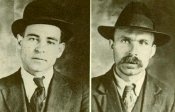


A: Eccoli là, andiamo, andiamo! Oh, che è tutta chella folla, neh?
B: Come, non lo sapete? C'è 'o comizio per Sacco e Vanzetti!
A: Oh, quelli due che sono stati condannati a morte?
B: Yes! Eh, ma ora cercano di salvarli.
A: Ma chille, dice la gazzetta, hanno ucciso pure!
B: Eh, e voi ci credete? 'Nca non dicono pure che hanno arrubbato?
A: Hanno arrubbato pure?
C: Ma via, finitela! Non dite più sciocchezze! Quei due poveri disgraziati non hanno fatto proprio nulla!
A: E io che ne saccio, gioia 'e sora? A me accussì m'hanno ditto e accussì ve dico!
D: E allora perché li condannano a morte?
C: Eh, caro mio, chissà quanti innocenti sono stati condannati come loro!
A: Poveri cristiani!
B: Ma dico io, non si può fare niente per salvarli?
C: Ed è perciò che si fanno tutti questi comizi e proteste.
A: Sentite, è proprio 'nu peccato! A mannà a morte 'sti poveri padri 'e famiglia pe' senza niente!
B: Oh, sure!
A: Oh, sperammo 'a Madonna che facesse 'a grazia!
C: Altro che Madonna! Dobbiamo essere noi a combattere per salvarli! Tanto più che sono italiani come noi!
B: Ah, questo per esempio non vole dire niente! Perché, o italiani o americani, quando uno è innocente si deve aiutare sempre!
A: Avete ragione!
B: Oh, sentite! State accuorti, che stanno cominciando a parlare!
A: Zitti!
E: Amici, voi già sapete lo scopo che ci ha riuniti in questa piazza. Ed io sono contento di vedere in questo momento solenne un popolo formato non solo di italiani, ma di gente di tutte le razze: italiani, americani, ebrei, inglesi, giapponesi. Tutti, in quest'ora fatale, ci siamo riuniti per formare una sola razza: la razza umana! Senza distinzione di classe, di età e di partiti!
VOICE: Bravo!
E: Noi siamo qui per difendere una santa causa! Per salvare due nostri cari fratelli che, per un errore giudiziario, sono condannati a morire sulla sedia elettrica! Noi dobbiamo protestare energicamente contro questa ingiusta condanna! Ingiusta, sì, perché tutti sanno che al momento della tragedia i due poveri condannati, Sacco e Vanzetti, si trovavano molto lontani dal posto del delitto! Io ricordo ancora l'ultima domanda che il giudice fece ai due condannati: «Avete niente da dire dopo la vostra condanna alla sedia elettrica?» E la risposta fu: «Sì, dobbiamo dire che siamo innocenti!» Ed innocenti sono! Ed ora, signori, alzate il vostro grido di protesta! Se Sacco e Vanzetti vanno a morte, cosa commette la legge?
Folla: Un'ingiustizia!
E: Cosa sono i due condannati?
Folla: Sono innocenti!
E: Cosa aspettano Sacco e Vanzetti?
Folla: La grazia!
Contributed by Riccardo Venturi - 2026/10/18 - 17:47
English translation / Traduzione inglese
Traduction anglaise
Englanninkielinen käännös:
Siân Gibby
From an Essay by Joseph Sciorra
Traduction anglaise
Englanninkielinen käännös:
Siân Gibby
From an Essay by Joseph Sciorra
These Italian- and Neapolitan-language immigrant recordings are key sound documents of the Italian American political sentiment regarding the injustices meted out to Sacco and Vanzetti. They are particularly significant because they were recorded by popular immigrant artists of their day and issued by US commercial recording labels. The two-sided Columbia (14288-F) disc with the Compagnia Columbia’s “Protesta per Sacco e Vanzetti” on Side A and Raoul Romito’s “Sacco e Vanzetti” on Side B is a significant recording in US history. “Protesta per Sacco e Vanzetti” is a 2:50-minute spoken-word recording with an ensemble enacting a rally in support of the two anarchists. The author of this piece is Frank Amodio, who was an influential lyricist, composer, and publisher of Italian- and Neapolitan-language recordings. Topical songs were one of his trademarks; he composed tunes about Umberto Nobile’s expedition to the North Pole and the death of Rudolph Valentino, among other subjects. He wrote comic routines for Giuseppe De Laurentiis and the husband-and-wife team Tito Vuolo and Grace Narciso, as well as melodramatic songs recorded by such greats of the Italian immigrant music scene as Alfredo Bascetta, Giuseppe Milano, and Gilda Mignonette. And he was a prolific writer and performer of ensemble works with several actors for the Columbia, OKeh, and Victor record companies. Antonio Sciotti, a student of New York City’s Neapolitan song tradition, lists the Compagnia Columbia members on “Protesta per Sacco e Vanzetti” as being Frank Amodio, Laura Colombo, Paolo Dones, Giuseppe De Laurentiis, Michele Rapanaro, and Aristide Sigismondi and suggests that the diva of the immigrant stage, Gilda Mignonette, may have also been involved. “Protesta per Sacco e Vanzetti” presents a scene of a protest rally for the two condemned men. Except for a voice which exclaims once, in English, “Shut up!” the actors speak in standard Italian with individualized voices marked by varied regional Italian accents: Abruzzo (Sigismondi), Bari (Rapanaro), Naples (De Laurentiis and Colombo), and Sicily (Dones). This mix of accented Italian, the very voices of the varied Italian immigrant community, is an auditory convergence united in the protest for justice. The scene begins with several unnamed characters discussing t the guilty verdict, suggesting the lack of knowledge and different opinions among Italian Americans at the time. - Joseph Sciorra, 2019
[Protest for Sacco and Vanzetti]
A: Hey, what’s this crowd doing here?
B: How can you not know? It’s an assembly for Sacco and Vanzetti.
A: Oh, those poor guys who have been condemned to death?
B: Yeah. But now we’re trying to save them.
A: But those two, people told me; I know they’re guilty of murder!
B: And you believe it! They say they didn’t even steal anything.
A: Not even the robbery?
C: Come on; enough! Stop saying dumb stuff. Those two poor guys haven’t done anything wrong.
A: Oh, well. What do I know, for heaven’s sake? They told me what they’re accused of and I am just repeating it.
D: Well, then why are they condemned to die?
C: Oh, my friend. Who knows how many innocent men have been condemned like them?!
A: Poor fellows!
B: But, I mean, is there nothing one can do to save them?
C: It’s for them that there are all these demonstrations and protests.
A: Listen, it’s really a sin to send fathers with families to death for no reason!
B: Oh, sure!
A: Oh, we must hope for the grace of the Madonna.
C: Forget the Madonna! We must be the ones to fight and save them. Even more because they are Italians like us.
B: Oh, come on. It has nothing to do with who is Italian or American; when someone is innocent we should help them always.
A: You’re right!
B: Hey, shut up! Shut up! They’re starting to talk.
A: Quiet!
E: Friends, you already know what has brought us together here, and I am happy to see in this solemn moment a crowd made up not just of Italians but of people of all nationalities: Italians, Americans, Jews, English, Japonese. At this fatal hour we have come together to form a single race: the human race! With no differences based on age, on class, or on party.
VOICE: Bravo!
E: And we are here to support a holy cause, to save to of our brothers who because of a judicial error are condemned to die in the electric chair. We must protest energetically against this unjust condemnation. Yes, unjust! Because we all know that at the moment of the tragedy the two poor condemned men were far from the scene of the crime. I remember now the last question that the judge asked the two men: “Don’t you have anything to say after having been sentenced to the electric chair?” And the answer was, “Yes, we must say that we are innocent!” And they are innocent! And now, gentlemen, raise your voices in protest. If Sacco and Vanzetti go to their deaths, what will the law be committing?
Crowd: An injustice!
E: And what are the condemned men?
Crowd: They are innocent?
E: What are Sacco and Vanzetti waiting for?
Crowd: For a pardon!
Contributed by Riccardo Venturi - 2026/10/18 - 17:57
Traduzione finlandese / Finnish translation / Traduction finnoise / Suomennos: Juha Rämö

[Mielenosoitus Saccon ja Vanzettin puolesta]
A: Hei, mitäs täällä on tekeillä?
B: Miten voit olla tietämättä? Väki on koolla Saccon ja Vanzettin puolesta.
A: Ai niiden kuolemaan tuomittujen raukkojen?
B: Niin, mutta nyt me yritämme pelastaa heidät.
A: Mutta minulle kerrottiin, että ne kaksi ovat syyllisiä murhaan!
B: Ja sinäkö uskot sen? He sanovat, etteivät edes varastaneet mitään.
A: Ai siinä ryöstössä?
C: Nyt riittää! Lakkaa puhumasta pehmoisia. Ne kaksi raukkaa eivät ole tehneet mitään väärää.
A: Ja mistä ihmeestä minä voisin sen tietää? Minulle kerrottiin, mistä heitä syytetään, ja toistan vain sen, minkä kuulin.
D: No miksi heidät sitten on tuomittu kuolemaan?
C: Voi hyvä ystävä, kuka tietää, kuinka moni syytön on tuomittu heidän laillaan?
A: Miesparat!
B: Mutta eikö heidän pelastamisekseen sitten ole tehtävissä mitään
C: Juuri heidän vuokseen näitä mielenosoituksia ja protesteja järjestetään.
A: On suuri synti tuomita syyttömiä perheenisiä kuolemaan!
B: Varmasti on!
A: Meidän on pantava toivomme Neitsyt Marian armoon.
C: Unohda Neitsyt Maria! Me olemme ne, joiden on taisteltava ja pelastettava heidät. Sitäkin suuremmalla syyllä, että he ovat italialaisia niin kuin mekin.
B: Eihän sillä ole mitään väliä, onko italialainen vai amerikkalainen. Jos joku on syytön, häntä on aina autettava.
A: Näin on!
B: Hei, nyt hiljaa! Puhe alkaa.
A: Hiljaa!
E: Ystävät, te tiedätte jo, miksi olemme kokoontuneet tänne. Olen iloinen voidessani huomata, että tässä vakavassa tilanteessa paikalla ei ole ainoastaan italialaisia vaan kaikkien kansalaisuuksien edustajia: italialaisia, amerikkalaisia, juutalaisia, englantilaisia, japanilaisia. Tänä kohtalon hetkenä olemme kokoontuneet tänne yhtenä rotuna, ihmisrotuna, vailla iästä, yhteiskuntaluokasta tai poliittisesta katsomuksesta johtuvia eroja.
ÄÄNI: Bravo!
E: Ja me olemme täällä pyhän asian puolesta, pelastamassa veljiämme, jotka on oikeusmurhan takia tuomittu kuolemaan sähkötuolissa. Meidän on kaikin keinoin osoitettava vastustavamme tätä epäoikeudenmukaista tuomiota. Juuri niin, epäoikeudenmukaista! Sillä me kaikki tiedämme, että tuomitut miesparat olivat tapahtumahetkellä kaukana rikospaikasta. Muistan, mikä oli tuomarin viimeinen kysymys miehille: ”Eikö teillä ole mitään sanottavaa nyt, kun teidät on tuomittu kuolemaan sähkötuolissa?” Ja vastaus kuului: ”On kyllä. Meidän on sanottava, että olemme syyttömiä!” Ja syyttömiä he ovat! Ja nyt, hyvät ihmiset, huutakaa ilmoille vastalauseenne. Jos Sacco ja Vanzetti joutuvat kohtaamaan kuolemansa, mihin oikeus silloin syyllistyy?
Väkijoukko: Vääryyteen!
E: Ja mitä ovat tuomitut?
Väkijoukko: Syyttömiä!
E: Mitä Sacco ja Vanzetti odottavat?
Väkijoukko: Armahdusta!
Contributed by Juha Rämö - 2026/10/20 - 12:35
×
![]()
Note for non-Italian users: Sorry, though the interface of this website is translated into English, most commentaries and biographies are in Italian and/or in other languages like French, German, Spanish, Russian etc.

Testo / Text / Texte / Teksti: Frank Amodio
Compagnia Columbia, Columbia Records 14288-F
Il disco Columbia Records 14288-F, senza data ma con tutta probabilità del 1927, riporta sulla prima facciata questa “Protesta per Sacco e Vanzetti” scritta dal paroliere e musicista italoamericano Frank Amodio. Si tratta in realtà di un breve sketch teatrale (durata: 2’ 50”) che mette in scena una manifestazione di protesta di immigrati italiani in favore di Sacco e Vanzetti. Si veda sotto l’estratto dal saggio di Joseph Sciorra pubblicato nel 2019: ne viene qui riportata la traduzione italiana. Il testo originale è recitato con parti in italiano ed altre in vari dialetti meridionali (prevalentemente in napoletano, ma sembra di sentire dei personaggi che parlano in un dialetto più simile al siciliano). Il documento sonoro è abbastanza ben conservato da poter capire agevolmente le parti in italiano; discorso diverso per le parti in dialetto, che non siamo stati in grado di decifrare appieno all'ascolto. Abbiamo quindi deciso, in via del tutto eccezionale, di mettere in azione l'"intelligenza artificiale" che ha svolto il lavoro di trascrizione. Si può anche consultare la traduzione inglese di Siân Gibby, tratta dalla pagina della Sacco and Vanzetti Commemoration Society [RV 18-10-2026]